
Medical Billing Service
Streamlined Billing Workflow
The Medical Billing Process
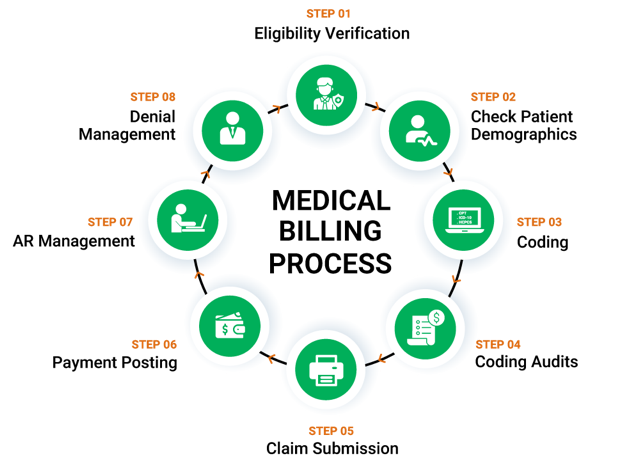
The medical billing cycle involves a series of steps, often categorized into front-end (pre-service) and back-end (post-service) activities.
Patient Registration & Insurance Verification
Gathering accurate demographic and insurance information is the first step. Staff must verify a patient's eligibility and benefits, including co-pays, deductibles, and whether prior authorization is needed for specific services.
Medical Coding
Medical coders review clinical documentation (medical records) and translate diagnoses, procedures, and services into universal alphanumeric codes (such as ICD-10 and CPT codes).
Charge Entry & Claim Generation
The codes and service charges are entered into a practice management system or billing software to create an itemized invoice, often called a superbill. This information is then used to generate an official claim form, like the CMS-1500 or UB-04, for submission to the payer.
Claim Submission & Scrubbing
The claim is sent to the insurance company, typically electronically, often via a clearinghouse that "scrubs" the claim for errors or compliance issues before it reaches the payer.
Payer Adjudication & Payment Posting
The payer reviews the claim and decides the payment amount (adjudication). They send an Electronic Remittance Advice (ERA) to the provider and an Explanation of Benefits (EOB) to the patient detailing what was covered. The payment amount is posted to the patient's account.
Denial Management & A/R Collections
Denied or rejected claims are promptly investigated and corrected, or appealed. Any remaining balance not covered by insurance (e.g., deductibles, co-insurance) is then billed to the patient, with follow-ups for delinquent accounts.ean claims quickly and managing denials effectively.
Smarter Billing Operations
Benefits of Outsourcing Medical Billing
Healthcare providers often outsource these complex functions to third-party medical billing companies to improve efficiency and financial performance. Key benefits include
Increased Revenue
Billing services use expertise to ensure accurate coding and claims submission, leading to fewer rejections and optimized reimbursement.
Reduced Administrative Workload
Outsourcing allows medical staff to focus more on patient care and less on complex billing and insurance issues.
Compliance & Expertise
Professional billing services stay current with ever-changing regulations, coding guidelines, and payer rules, reducing the risk of costly penalties or audits.
Cost Savings
Outsourcing can be more cost-effective than maintaining an in-house billing department, saving on overhead, salaries, and training expenses.